Curious finds beneath boards, behind walls and below ground
The true story of a building is rarely written on its walls – sometimes it’s hidden beneath its floors.
At Castellum, that sense of possibility is what drives us every day.
Of course, discoveries during renovation often begin innocently enough – perhaps with peeling back layers of wallpaper, moving from the questionable swirling patterns of the 1960s to something far more elegant and historic beneath. But very often, what we uncover goes well beyond decorative archaeology.
From protective symbols carved into stone, to hidden objects, human remains, forgotten wells and even Victorian firearms, these discoveries remind us that buildings are not just structures, they are layered records of centuries of human life, belief and practice.
Witches’ marks and masons’ marks: protection and craftsmanship
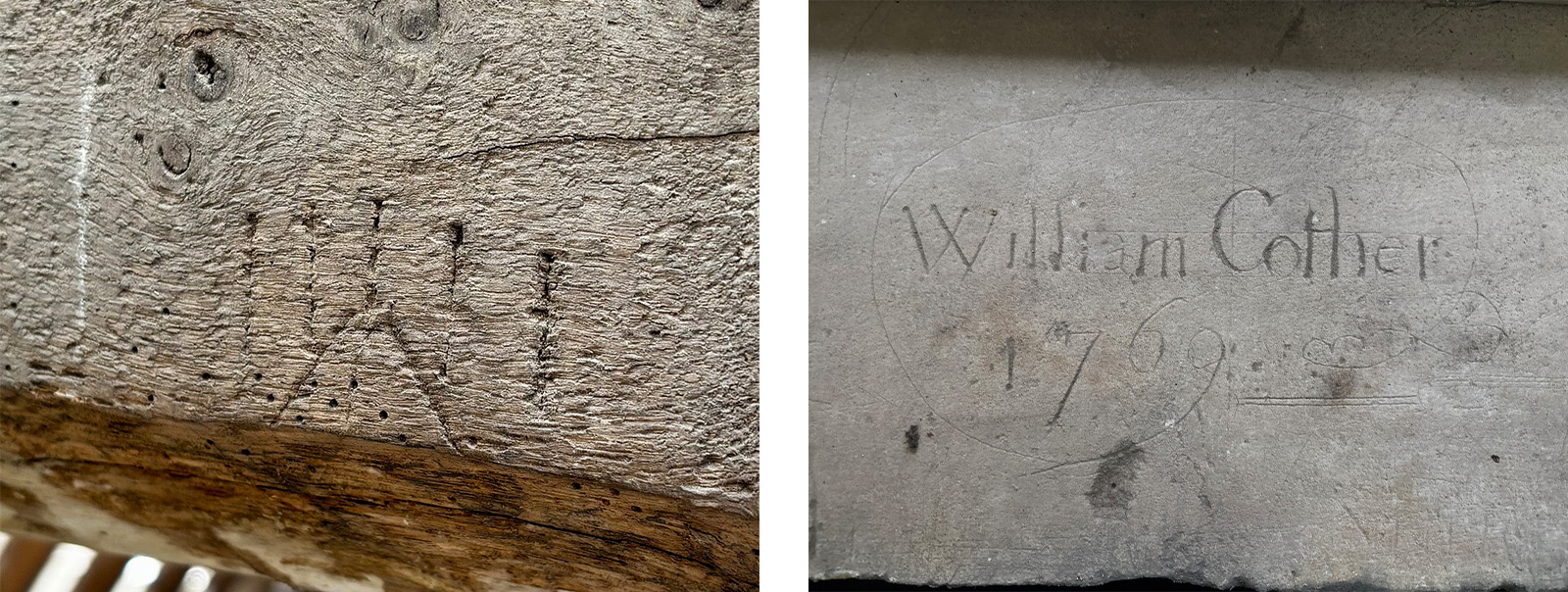
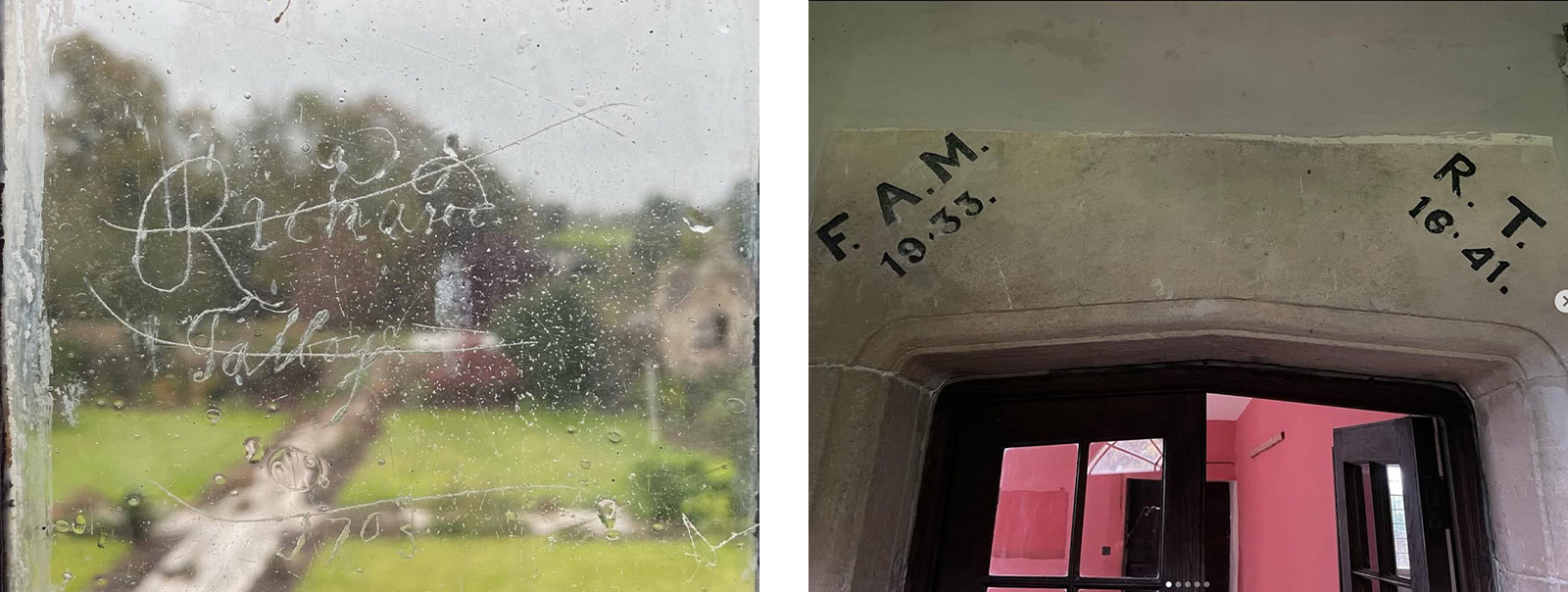
Historic properties frequently reveal ritual protection marks – often called witches’ marks – scratched into timber beams, stonework and around fireplaces, doors and windows. These markings, common between the 16th and 18th centuries, are known as apotropaic symbols, created specifically to ward off evil spirits or misfortune from entering the home.
Alongside these, we often find masons’ marks. Unlike witches’ marks, these are the working signatures of stonemasons and are geometric symbols carved into stone to identify their work. They provide a direct and tangible link to the skilled craftspeople who shaped these buildings hundreds of years ago.
Both types of marks speak of human presence: one born of belief and superstition, the other of pride in workmanship. Both types of marks have come to light in recent months on various projects at Castellum and it is always a treat to discover them!
The hidden shoe phenomenon: folk belief beneath the floorboards
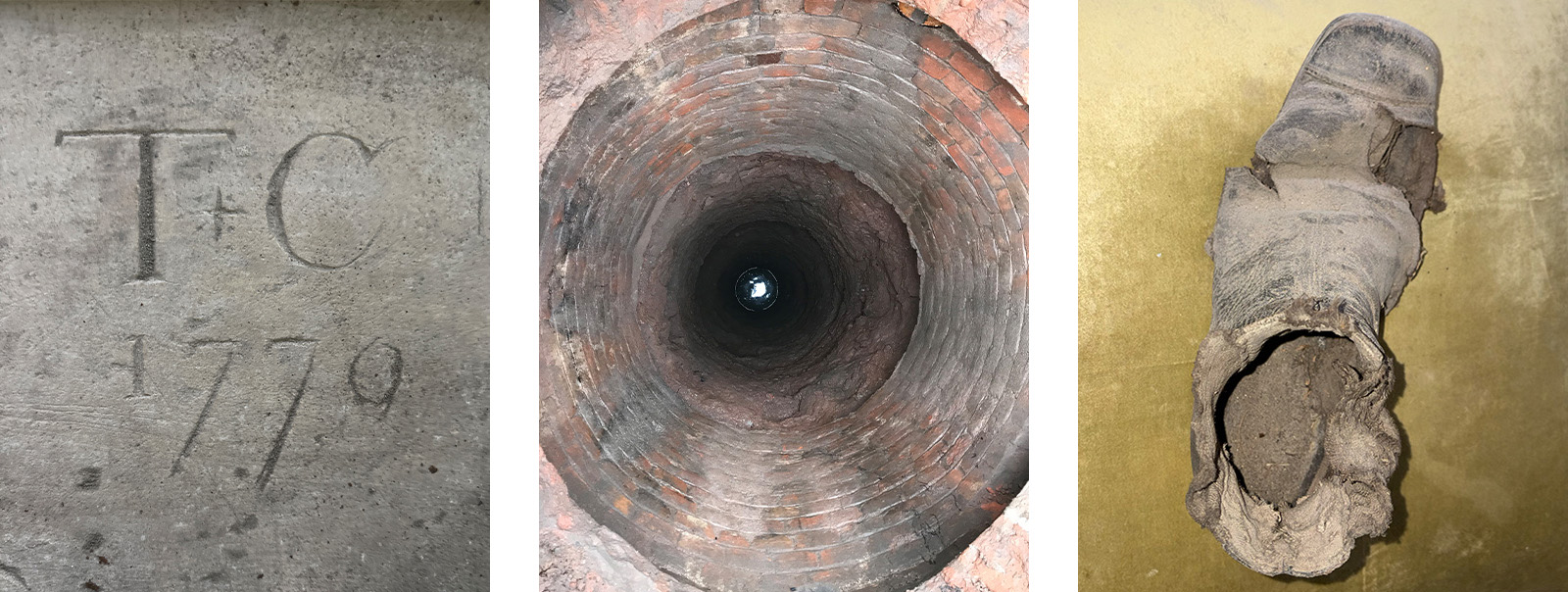
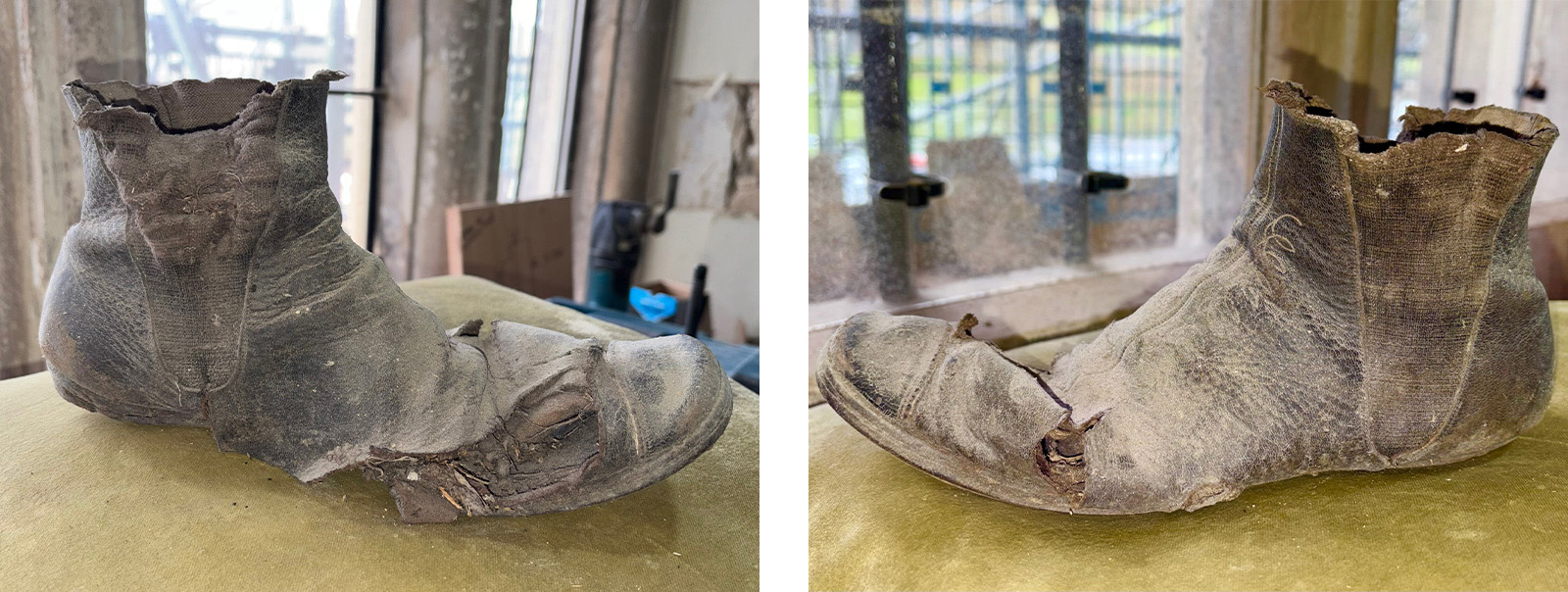
One of our more intriguing recent discoveries was a single, well-worn shoe concealed beneath the floor of a fabulous Grade I listed project. Research led us to discover that its placement was not accidental.
From the medieval period through to the 19th century, it was a widespread folk custom across Britain to deliberately hide shoes within the fabric of a building – under floorboards, in wall cavities or within roof spaces. The belief was that a worn shoe retained the spirit or essence of its owner. Placing it within the structure of a house acted as a protective charm – a way of trapping or repelling evil spirits that might attempt to enter. These shoes are often found near chimneys, doors or windows – the perceived weak points of a building.
Members of our team, when carefully lifting the original floors for restoration, discovered this single concealed boot – deliberately placed there centuries ago as an act of protection. Finds like this are a quiet but powerful reminder that past occupants once relied on belief and ritual to safeguard their homes in ways very different from our modern security systems.
Care before curiosity: protecting the past
Discoveries like concealed shoes only come to light because of the way we approach our work.
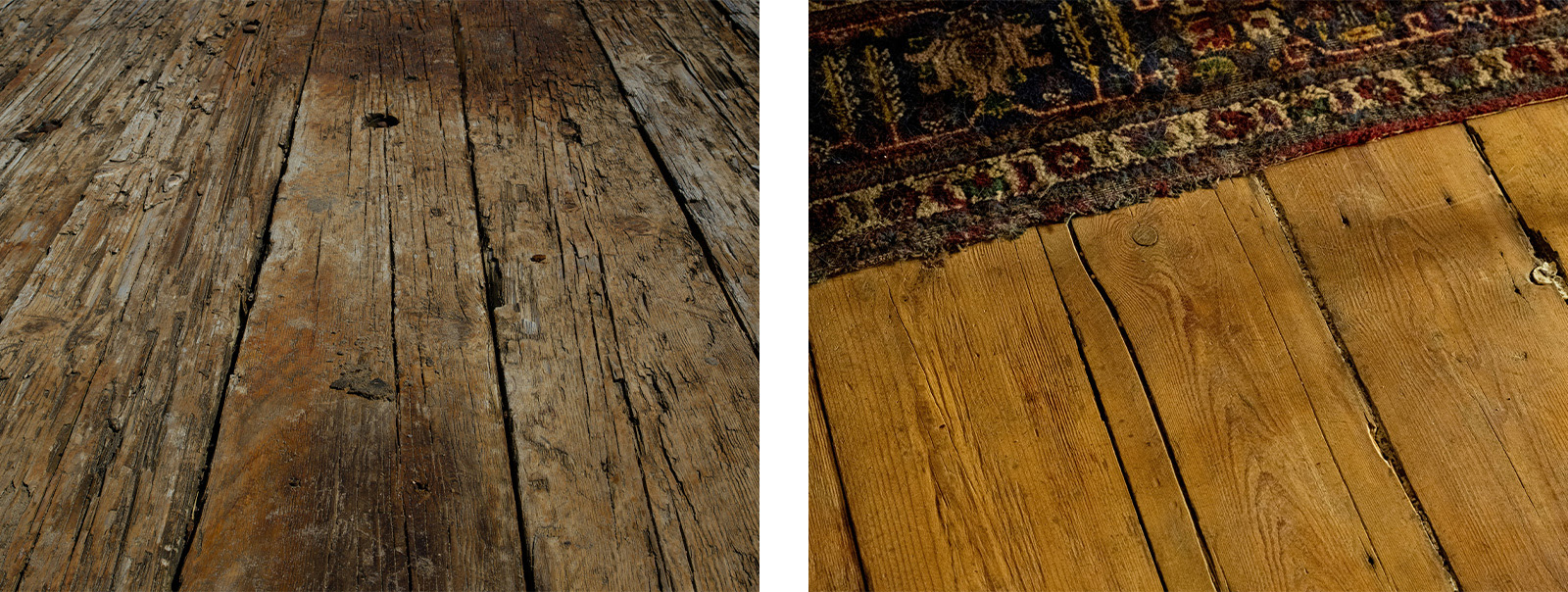
At Castellum, lifting historic floorboards is never a case of simply prising them up. Before any board is touched:
- The entire area is extensively photographed
- A scaled plan is drawn and each board is numbered sequentially
- Boards are carefully marked in pencil or chalk only as they are lifted
- Every board is catalogued on a salvage schedule and stored in accordance with strict guidance
- If stored on site, daily photographs are taken of the salvage area to maintain a clear record
Before lifting begins, we assess the structural performance of the floor, the level of decay, the type and age of boards, how many layers exist and how they were originally fixed. Wide boards, often historically significant and undisturbed for centuries, require particular skill and are only lifted by experienced craftspeople.
This same methodology applies to stone flags, stone and slate roof tiles, historic doors and other architectural elements. It is this patience, care and documentation that allows us to uncover history without destroying it.
Unexpected artefacts: a gun encased in concrete
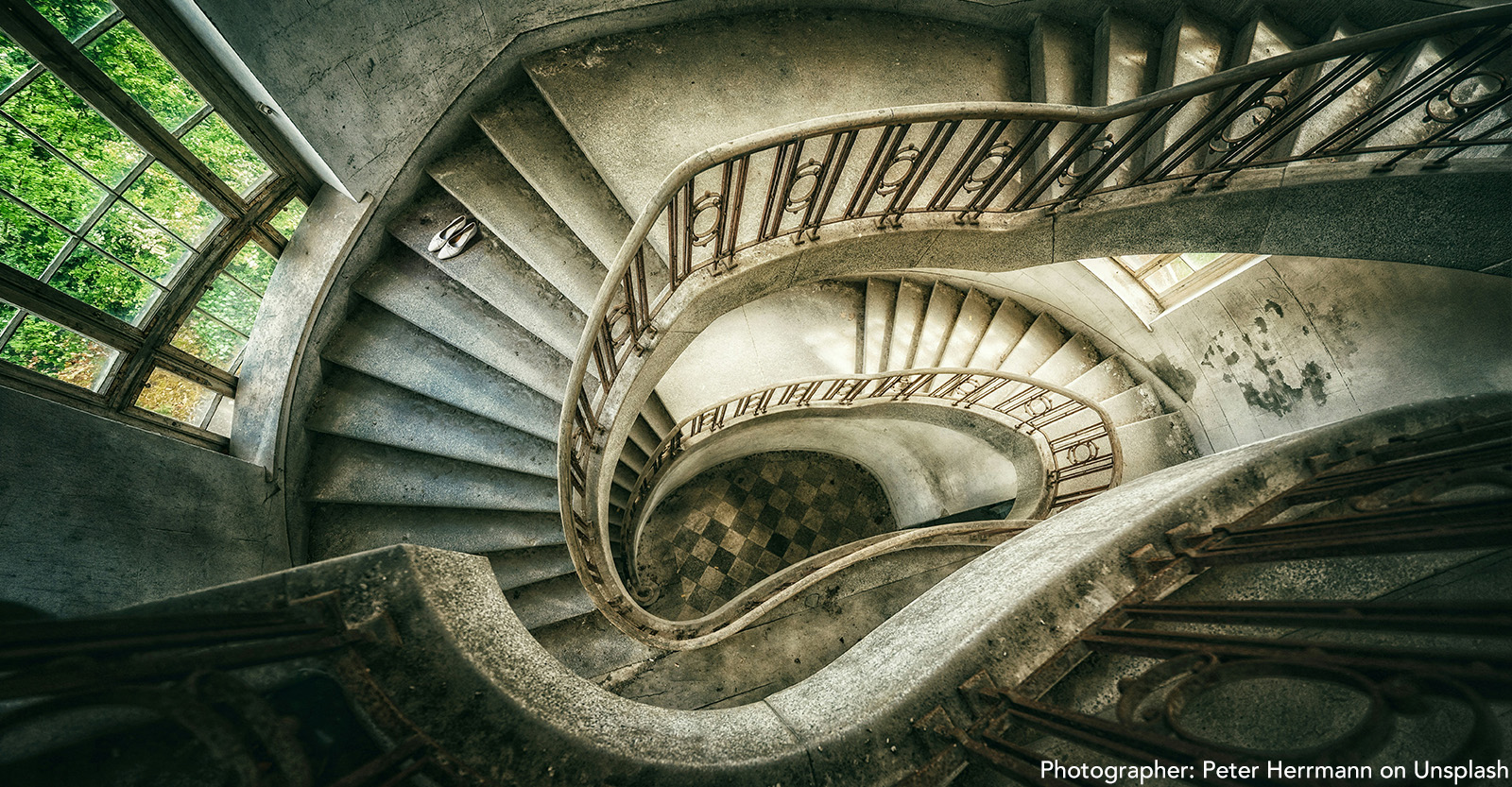
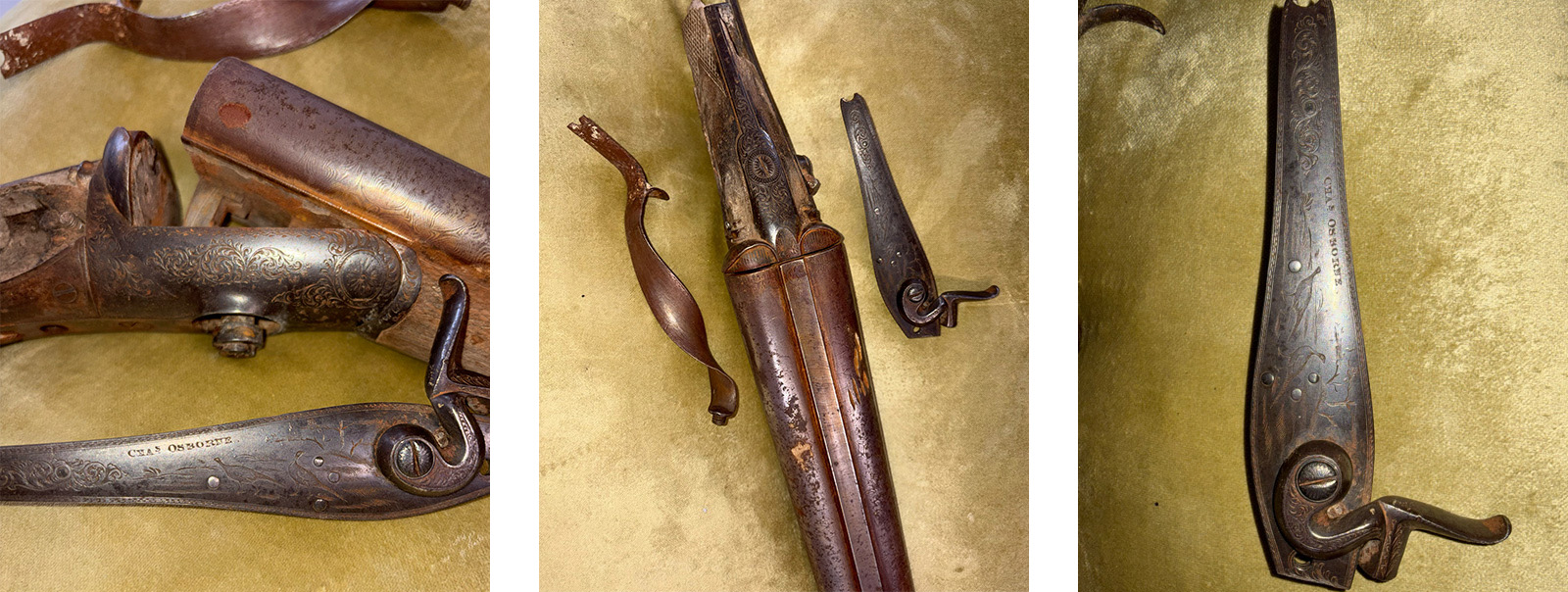
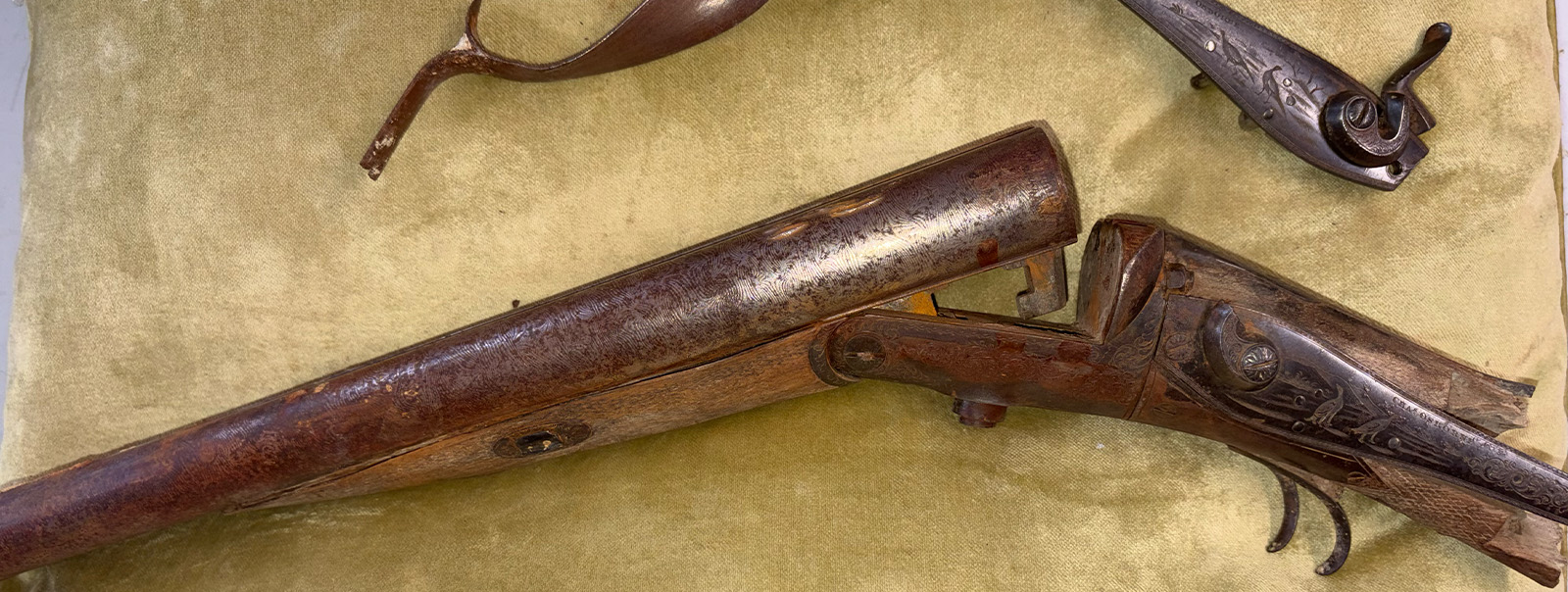
During the restoration of another Grade I listed manor house in the Cotswolds, our team was recently removing some (relatively recent) buildings works dating from the 1920s-40s to open up the area which had previously housed a spiral staircase. As the stone masons dismantled the infill, they uncovered something entirely unexpected – an historic firearm encased within the concrete.
Our client has since cleaned the gun and revealed engraved markings including the name Chas (Charles) Osbourne. Initial research suggests the firearm dates between 1845 and 1896, placing it in the Victorian period. How it came to be embedded within 20th-century building work remains a mystery.
Bones in the Earth: When groundworks reveal human stories
During groundworks for a new build near the Thames in Buckinghamshire, close to Bisham Abbey, our team (much to their horror) uncovered a femur bone. Archaeological investigation and carbon dating revealed the remains belonged to a teenage boy from around the year 1600. His burial was unusual – north-south, face down and slumped, rather than the traditional Christian east-west alignment. The rest of the skeleton, including the skull, was never found and the best guess was that it was likely disturbed during earlier works that had taken place in the 1960s.
It was a sobering discovery for both team and client and a reminder that beneath historic landscapes lie very real human stories.
Wells beneath the house: forgotten water sources
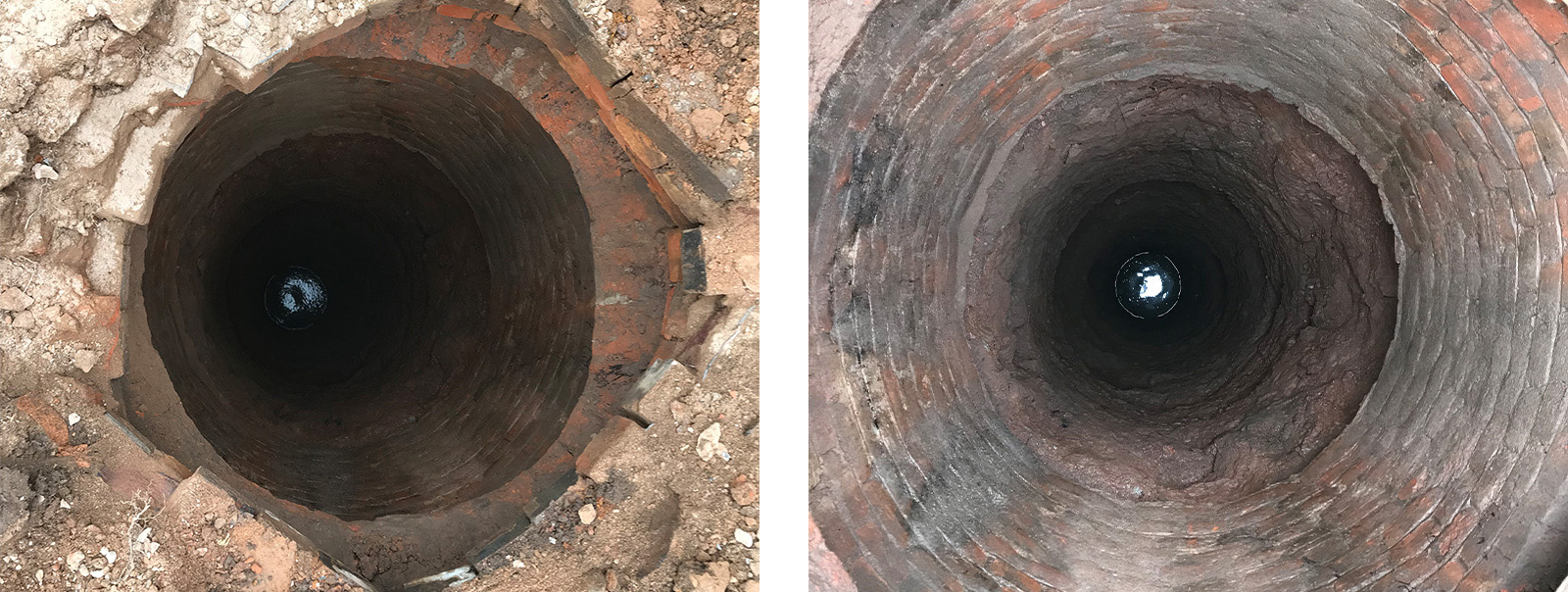
We regularly encounter old wells hidden beneath houses, gardens and courtyards.
On a recent project, what appeared to be solid ground gave way to reveal an exceptionally deep, beautifully stone-lined well, disappearing far below the building. Before mains water, these were essential to daily life. Many were simply capped rather than filled, remaining intact and forgotten for centuries.
They are striking discoveries and require careful management for safety, but they offer a remarkable link to how previous generations lived.
A lighter moment: a telephone box in the living room
Not every discovery reaches back centuries and not every discovery is hidden. One recent project had been purchased by our client with a 1960s red telephone box installed in the living room – proof that every era leaves its own, sometimes eccentric, contribution to a building’s story.
Buildings as Time Capsules
For Castellum, building work often becomes exploration. Whether uncovering protective symbols, a concealed shoe placed centuries ago, a Victorian firearm sealed in concrete, ancient human remains, forgotten wells or quirky modern relics, each find adds another layer to the story of the buildings we restore.
Because beneath every property lies history – waiting patiently to be uncovered, if only you lift the floorboards carefully enough.